Visual Arts & Aesthetics
Arthur Bispo do Rosário
Reach: It reaches the Americas and also Europe and/or West/Lusophone Africa.
By transforming embroidery, everyday objects, and humble materials into a visual universe of his own, Arthur Bispo do Rosário became one of the most singular figures in Brazilian art. His work projects a radical creativity shaped by Black, peripheral, and institutional experiences, and today circulates through museums, biennials, and international debates on art, memory, and mental health.
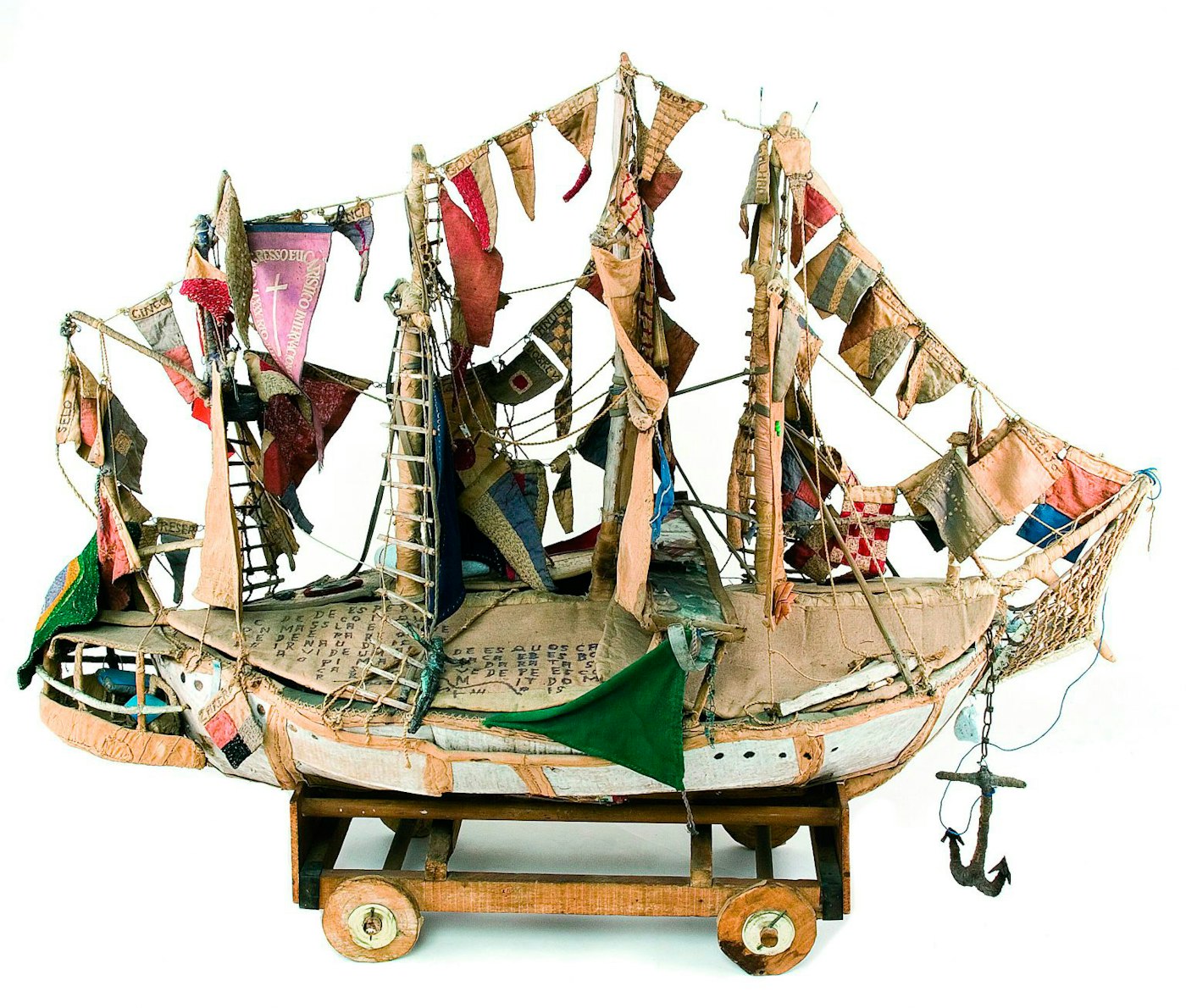
Arthur Bispo do Rosário created, especially during the decades he lived at Colônia Juliano Moreira in Rio de Janeiro, a visual universe of his own made from embroidery, banners, assemblages, miniatures, and everyday objects reorganized as an inventory of the world. Born in Japaratuba, Sergipe, Bispo was a Black, self-taught man from Northeast Brazil who did not consider himself an artist: he understood his work as part of a spiritual mission.
Works such as Manto da Apresentação transformed humble materials and experiences of confinement into a visual language of remarkable aesthetic power, one that now informs conversations about contemporary art, memory, spirituality, and psychiatric institutions. His international profile grew significantly after his death, with Brazil’s representation at the 1995 Venice Biennale, another appearance at the 2013 edition, and exhibitions in cities including London, Lisbon, Buenos Aires, and New York, establishing him as one of the most distinctive figures in Brazilian art on the international circuit.
Presence Indicators:
- He posthumously represented Brazil at the 46th Venice Biennale in 1995, alongside Nuno Ramos, a milestone in the consolidation of his international recognition.
- His work returned to the Venice Biennale in 2013, this time as part of the international exhibition The Encyclopedic Palace, expanding his presence beyond Brazil’s national representation.
- In 2023, he received his first solo exhibition in the United States, at Americas Society in New York, accompanied by coverage in international art media and publications.
- His work has maintained a lasting institutional presence: a museum is dedicated to preserving and promoting his legacy, a catalogue raisonné is in development, and his body of work is recognized by IPHAN as Brazilian cultural heritage.