Gastronomy & Culinary Culture
Jaboticaba
Reach: Reaches Latin America in a relevant way
A fruit with deep territorial and symbolic roots, jaboticaba brings together biodiversity, emotional memory, and aesthetic distinctiveness in an image immediately associated with Brazil. Across backyards, orchards, recipes, and research, it projects a country capable of transforming native nature into culture, language, and lasting fascination.
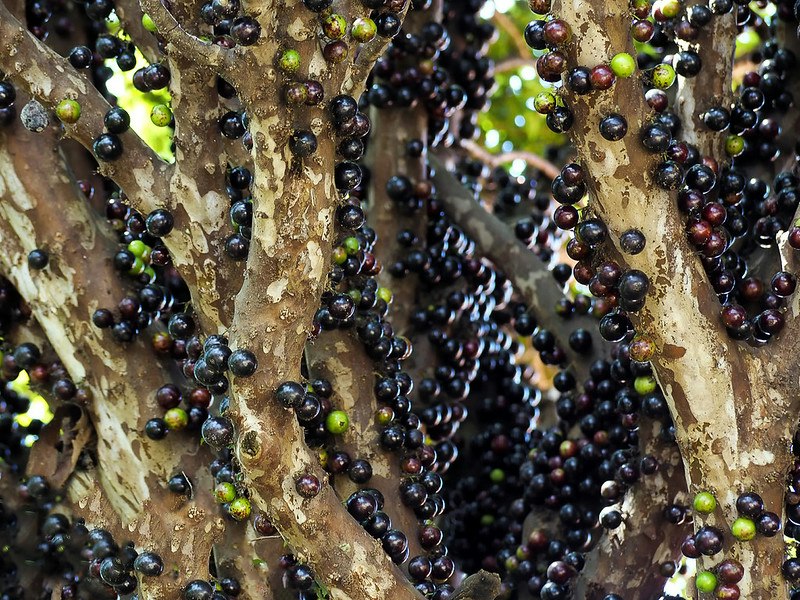
Native to the Atlantic Forest, jaboticaba holds a rare place in the Brazilian imagination because it brings together biodiversity, language, emotional memory, and visual impact in a single image: dark fruits growing directly from the tree trunk. Associated primarily with Southeastern Brazil, it appears across backyards, orchards, recipes, liqueurs, jams, and research into bioactive compounds, while its distinctive character has itself become a cultural metaphor for something seen as uniquely Brazilian. Its international circulation is often accompanied by fascination with both its unusual appearance and its strong territorial roots, helping Brazil gain visibility through gastronomic, ecological, and symbolic dimensions alike.
Presence Indicators:
- Images of the fruit growing directly from the trunk frequently appear in international articles and guides about rare or exotic foods, increasing its recognizability outside Brazil.
- Jaboticaba continues to attract scientific interest as a native Brazilian fruit, with research and projects focused on whole-fruit utilization, bioactive compounds, and new products.
- Its high perishability helps explain why it circulates less as fresh fruit and more as a story, a processed ingredient, and an object of international curiosity.
- The term “jabuticaba” has moved beyond botany and entered Brazil’s cultural vocabulary as a symbol of something highly particular to the country, an unusual sign of symbolic permanence for a fruit.