Music, Dance & Performance
Tropicália
Reach: It also reaches macro-regions outside the transatlantic axis, with evidence in Asia, Oceania, Arab regions and/or other African regions.
A movement that reinvented Brazil’s cultural image by blending popular music, the avant-garde, rock, poetry, television, and political critique into a bold and irreverent aesthetic. By projecting an experimental, contradictory, and cosmopolitan country, Tropicália turned Brazilian culture into a global reference for creativity, hybridity, and symbolic invention.
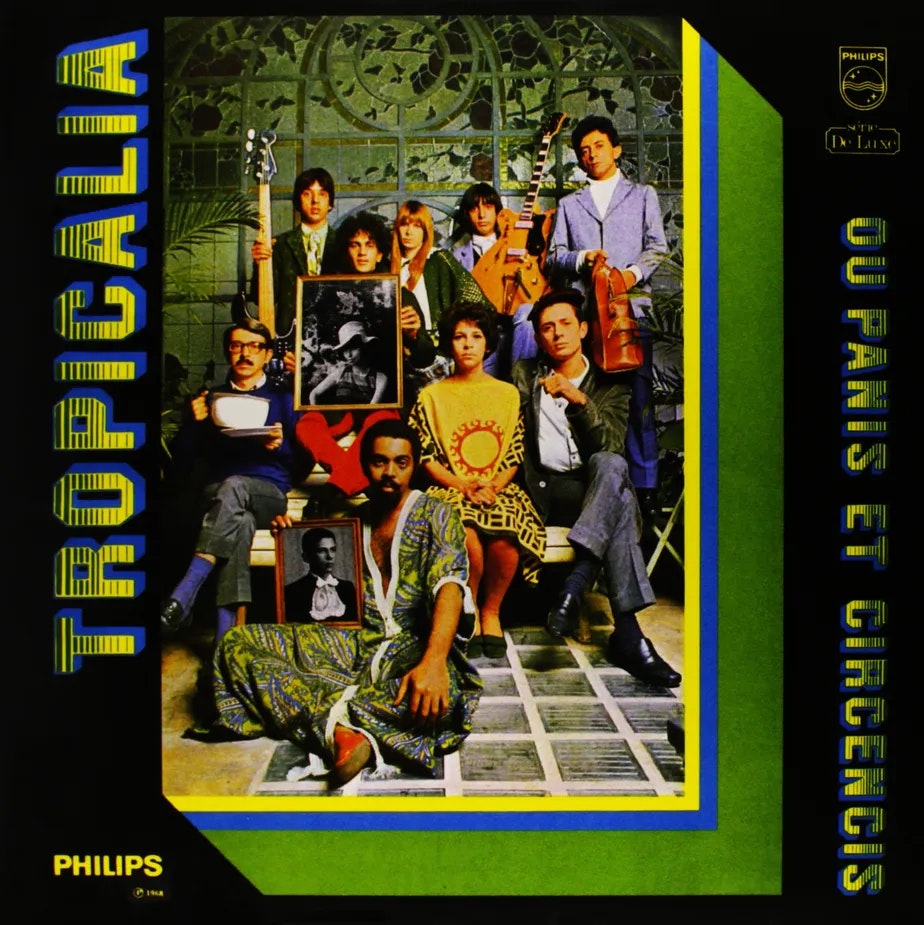
Tropicália was a Brazilian cultural movement that emerged in the late 1960s, bringing together music, visual arts, poetry, theater, television, and behavior in a language that was at once popular, experimental, and critical. Driven by figures such as Caetano Veloso, Gilberto Gil, Gal Costa, Tom Zé, Os Mutantes, Nara Leão, Torquato Neto, Rogério Duprat, and Hélio Oiticica, it combined samba, baião, bossa nova, psychedelic rock, international pop, the avant-garde, and modernist anthropophagy to produce an image of Brazil that was less folkloric and more contradictory, urban, electric, and inventive. At the height of the military dictatorship, its colorful, ironic, and disruptive aesthetic circulated through music festivals, records, television, exhibitions, and performances, transforming the way Brazilian culture came to be perceived abroad: not only as tradition, but as a laboratory of mixture, critique, and reinvention.
Presence Indicators:
- Recurring recognition by international cultural institutions such as MoMA, Tate, and Google Arts & Culture.
- Continued presence as an aesthetic and musical reference for Brazilian and international artists interested in cultural hybridity, counterculture, and pop experimentation.
- Reissues, documentaries, playlists, critical essays, and international media coverage continue to present Tropicália as one of the central turning points in modern Brazilian music.
- The 1968 album “Tropicália ou Panis et Circencis” remains a kind of sonic manifesto of the movement.