Heritage, Celebrations & Ways of Life
Carnaval
Reach: It also reaches macro-regions outside the transatlantic axis, with evidence in Asia, Oceania, Arab regions and/or other African regions.
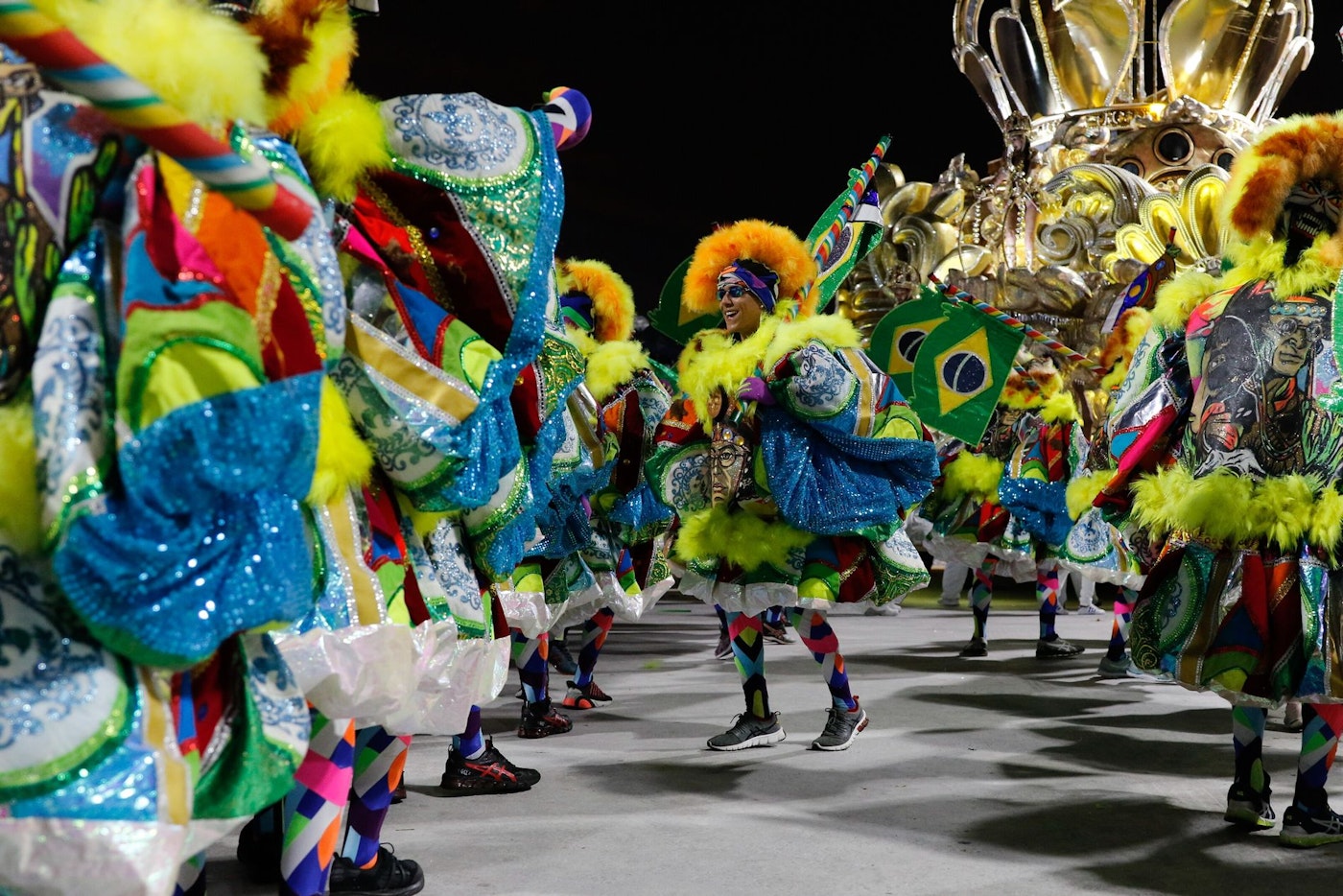
A major symbol of Brazilian popular creativity, Carnival brings together music, bodies, costumes, social critique, and the occupation of the streets in a celebration recognized around the world. Its many expressions — from samba to frevo, from Afro-Brazilian blocos to trios elétricos — project a festive, diverse, and inventive Brazil.
Brazilian Carnival is one of the country’s most widely recognized cultural expressions, bringing together samba school parades in sambadromes, street blocos, trios elétricos, frevo, maracatu, afoxés, marchinhas, costumes, and popular narratives that vary greatly from one region to another. Its formation cuts across the colonial entrudo, Afro-Brazilian traditions, Catholic festivities, urban cultures, and symbolic disputes over visibility, turning cities such as Rio de Janeiro, Salvador, Recife, Olinda, São Paulo, and Belo Horizonte into international showcases of Brazilian creativity. More than a festival, it has become a public language of music, the body, social critique, memory, and aesthetic invention, projecting artists, communities, samba schools, Afro-Brazilian blocos such as Ilê Aiyê and Olodum, women and men masters of samba, frevo, and maracatu, as well as figures such as Clementina de Jesus, Dona Ivone Lara, Neguinho da Beija-Flor, Daniela Mercury, Ivete Sangalo, and many other names connected to its multiple scenes. Its power lies in its ability to combine popular participation, spectacle, territory, and identity in an experience immediately associated with Brazil in the global imagination.
Presence Indicators:
- Recurring coverage in the international press, especially around Rio’s parades, street blocos, and the Carnivals of Salvador, Recife, and Olinda.
- Institutional recognition of languages connected to the celebration, such as frevo, inscribed by UNESCO as Intangible Cultural Heritage of Humanity.
- Annual tourist and media circulation, with images of costumes, samba schools, trios elétricos, and blocos functioning as immediate visual symbols of Brazil.
- The ability to renew social and historical narratives, with parade themes that address African ancestry, Indigenous peoples, the environment, religion, politics, gender, and popular memory.