Sports & Movement
Capoeira
Reach: It also reaches macro-regions outside the transatlantic axis, with evidence in Asia, Oceania, Arab regions and/or other African regions.
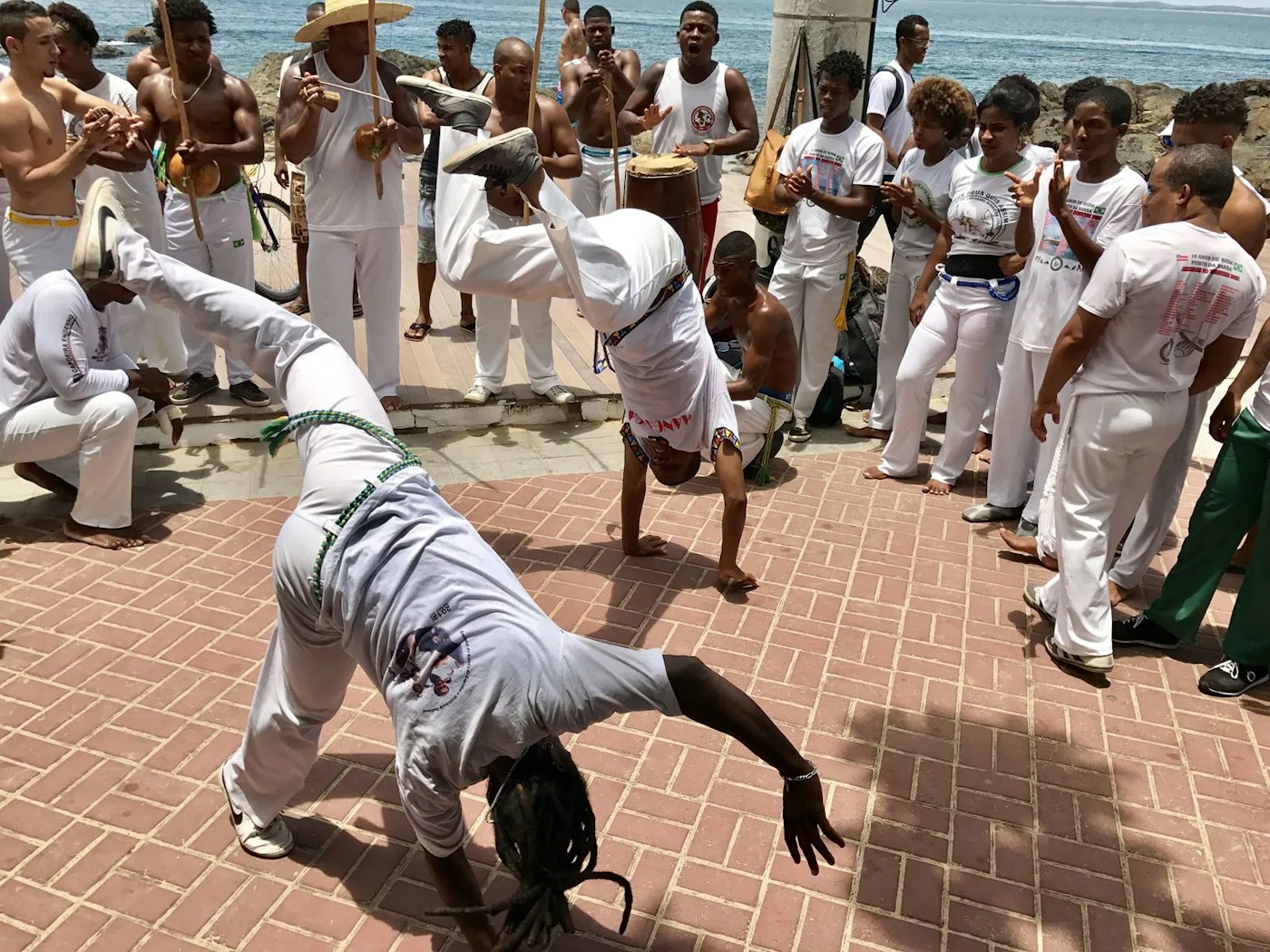
An Afro-Brazilian expression that brings together fighting, dance, music, and ritual, capoeira endured historical repression to become one of Brazil’s most widely recognized cultural symbols in the world. Its strength lies in the combination of body, ancestry, resistance, and community, projecting an image of the country connected to popular creativity and Black heritage.
Born from the Afro-Brazilian experience and associated with the resistance of enslaved Black people and their descendants, capoeira combines fighting, dance, music, play, ritual, and body-based pedagogy in an immediately recognizable martial art. Present in rodas led by male and female masters, with berimbau, singing, clapping, and improvisation, it went through periods of repression and marginalization before becoming one of the most widely disseminated Brazilian cultural expressions in the world. From the 20th century onward, figures such as Mestre Bimba, Mestre Pastinha, and Mestra Joana Angélica helped consolidate lineages, methods, and forms of transmission that keep its communal dimension alive.
Today, its circulation through schools, cultural groups, universities, festivals, films, games, social projects, and academies in Brazil and abroad projects an image of the country connected to bodily creativity, African heritage, musicality, resistance, and the coexistence of art and movement. The Capoeira Circle was inscribed on UNESCO’s Representative List of the Intangible Cultural Heritage of Humanity in 2014, and Iphan has recognized the Capoeira Circle and the Craft of Capoeira Masters as Brazilian Cultural Heritage since 2008.
Presence Indicators:
- Institutional recognition in Brazil by Iphan and internationally by UNESCO.
- Presence throughout Brazil and, according to Iphan, in more than 150 countries.
- Strong circulation in capoeira schools, festivals, social projects, universities, academies, documentaries, and digital content.
- Enduring presence as an Afro-Brazilian symbol of resistance, memory, music, body, and community.